

Risk Management
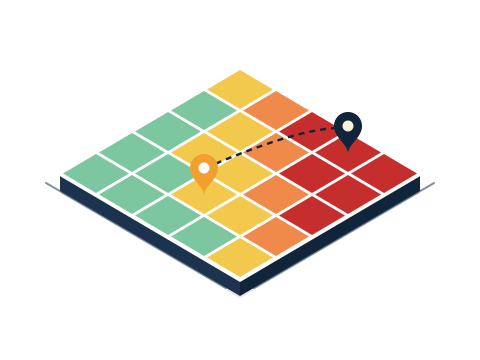
A living risk register with consistent likelihood × impact scoring, appetite and tolerance, treatment plans and a heatmap that takes you straight to the risks behind each cell.
What it does
Identify, assess and treat risks in one register shared by every unit. Each risk carries its cause, consequence, owner and department, with inherent and residual positions scored on 1–5 likelihood and impact scales.
Rating bands, appetite and tolerance are configurable per organisation, so the heatmap reflects your methodology. Every reassessment is kept, so you can show how a risk moved and why.
Key capabilities
What works in the platform today, and what is on the roadmap.
- Available working in the current release
- Planned on the roadmap — not yet available
- Available
Risk register (CRUD)
Create, edit and retire risks with ID, description, category, cause, consequence, owner and unit.
- Available
Inherent and residual scoring
Likelihood × impact on 1–5 scales, before and after controls and treatment.
- Available
Configurable rating bands
Set the score ranges for low, medium, high and critical to match your methodology.
- Available
Appetite and tolerance
Flag risks that sit above tolerance so they get attention first.
- Available
Interactive 5×5 heatmap
Click any cell to filter the register to the risks in that position.
- Available
Treatment plans
Mitigate, transfer, accept or avoid — with owners, due dates, progress and status.
- Available
Assessment history
Every scoring change is kept with who assessed it, when and a note.
- Available
Key risk indicators
Link KRIs with warning and alert thresholds to the risks they monitor.
- Planned
Quantitative and scenario analysis
Monte Carlo, loss-distribution and scenario modelling.
How it connects
Records are linked across modules, so the same fact is entered once and seen wherever it matters.
- Controls & RCSALink risks to the controls that mitigate them; control effectiveness informs residual scoring.
- Performance ManagementKRIs with thresholds give early warning on each risk.
- Internal AuditEngagement priority in the audit plan is derived from linked risks.
- Incidents & Corrective ActionsIncidents are linked to risks, and repeated incidents are flagged by the rule engine.
See Risk Management with your own data
Book a guided walkthrough, or sign in to your workspace to explore the module.
Consulting: consulting@4each1.com · Projects & systems development: projects@4each1.com